Bach Cantatas
Friday, July 22 & 29, 3:00 PM
J.S. Bach, Cantata No. 70, “Wachet! betet! Seid bereit allezeit,” BWV 70
I. Chorus: “Wachet! betet! betet! wachet!”
II. Recitative: “Erschrecket, ihr verstockten Sunder!”
III. Aria: “Wenn kommt der Tag”
IV. Auch gei dem himmlischen Verlangen“
V. Aria: “Lass’der Spotter Zungen schmahen”
VI. Recitative: “Jedoch! bei dem unartigen Geschlechte”
VII. Chorus: “Freu’dich sehr, o meine Seele”
VIII. Aria: “Hebt euer Haupt empor, und seid getrost”
IX. Recitative: “Ach, soll nicht dieser grosse Tag”
X. Aria: “Seligster erquickungs Tag”
XI. Chorus: “Nicht nach Welt, nach Himmel nicht”
J.S. Bach, Cantata No. 125, “Mit Fried und Freud ich fahr dahin,” BWV 125
I. Chorus: “Mit Fried und Freud ich fahr dahin”
II. Aria: “Ich will auch mit gebroch’nen Augen”
III. Recit.: “O Wunder, dass ein Herz vor der dem Fleisch verhassten Gruft
IV. Aria (Duet): “Ein unbegreiflich Licht erfüllt den ganzen kreis”
V. Recit.: “O unerschöpfer Schatz der Güte”
VI. Chorus: “Er ist das heil und sel’ge Licht”
J.S. Bach, Motet No. 6, BWV 230, “Lobet den Herrn, alle Heiden”
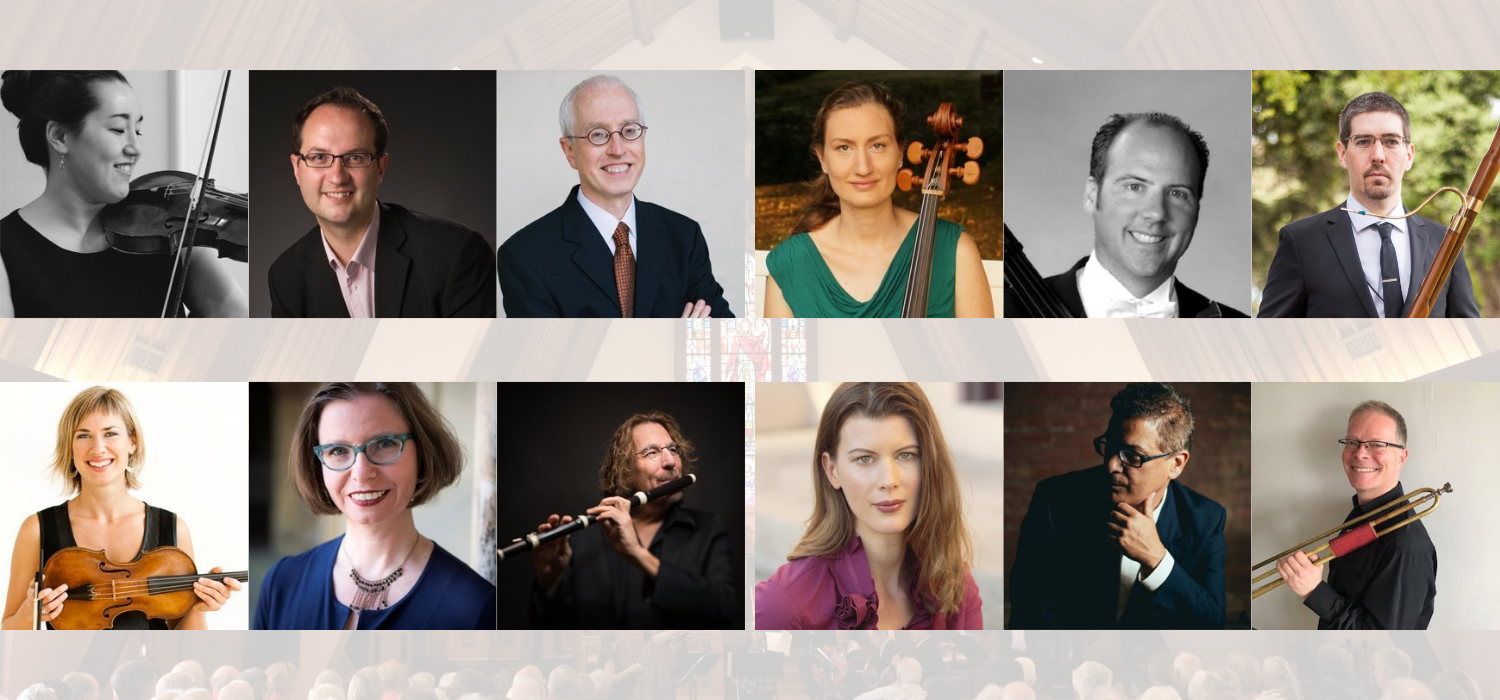
Artists: Andrew Arthur, director and organ; Clara Rottsolk, soprano; Meg Bragle, mezzo-soprano; Thomas Cooley, tenor; Dashon Burton, bass-baritone; Cristina Zacharias and Marika Holmqvist, violin; Cynthia Keiko Black, viola; Keiran Campbell, cello; Bruce Moyer, bass; Stephen Schultz, flute; Stephen Bard, oboe; Georganne Banker, bassoon; Meredith Brown, horn; Robert Farley, trumpet; Michael Beattie, harpsichord
Program Notes
Cantata BWV 70
German composers did not invent cantatas and Italians did not devise chorales. The trumpet/ oboe call-and-response that opens BWV 70 — indeed, the entire cantata itself— was borrowed from Italian models, and Bach appropriated the form of his suites from the French.
Music as we know it is probably the most universally embraced of all ritual behaviors. Without repetition itself — citing just that one cyclic characteristic — it becomes incoherent and meaningless; with too much repetition it bores and quickly annoys. Much more than a language of the emotions, music also speaks to the intellect, the senses, the imagination, and to memory. It has been argued that because music engages the subjective and objective consciousness simultaneously, it both corroborates instinct and teaches critical thinking. Even where that can be said for the other arts, few of them arouse such intense reactions and deep emotions with equal immediacy.
The cantata BWV 70 “stars” the bass soloist in two dramatic recitatives and a three-part aria with a bravura center section. Scholarship tells us that the cantata was first heard at Weimar in 1716, and that all the recitatives and the final chorale were apparently added to this Leipzig version in 1723. The work’s festive Advent theme anticipates Christmas.— Scott MacClelland
Cantata BWV 125
Bach’s Cantata Mit Fried und Freud ich fahr dahin (or With Peace and Joy I go From Here) is a chorale cantata, based on a hymn by Martin Luther by the same title, and was composed to celebrate the feast of the Purification of the Blessed Virgin Mary, or Candlemas. Cantata 125 is written in six short movements musically illustrating the hope believers feel with the promise of salvation.
The opening Chorus is a slow dance in twelve- eight time with ascending flute melodies floating beneath the chorale as they sing about the comfort and peace of God’s promise. In the first Aria, the mezzo-soprano soloist performs indulgent appoggiaturas above a flute and oboe d’amore duet; she voices a pleading prayer asking Jesus for protection from pain if her faith remains resilient. Tenor and bass soloists sing in canonic duet echoing the mention of a circular, enveloping light in the libretto. They sing with joyous gratitude, “Whoever believes will be blessed.”
The final Chorale is both a declaration and call to service; a guarantee to all believers, and a reminder to “enlighten those who do not know.”
—Jennifer Candiotti